The parts exist. Nothing assembles them.
What is a record layer for real-world assets?
A record layer is a single, shared account that brings together what is already known about an object.
For a work of art, that includes who made it and when, what it is made of, its title and who has owned it, its condition, where it has been shown, what it sold for, and what rights come with it. All of that information exists, but it is held by different people in different places. A record layer would connect those pieces, so that someone asking a question about the object gets one answer, and can check that answer without having to know the people who supplied it.
The used car market is a good example of what happens when scattered records are finally brought together. For a long time, buying a used car meant trusting the seller. The car’s history did exist, but it was spread out: the title was held by the state, the service records by whichever shop did the work, accident reports by insurers, and odometer readings on paperwork someone had filed. Every part of the history was written down somewhere, but none of it was connected.
What changed was not that people began keeping better records. Someone built a service that collected the existing records and put them in one place, so any buyer could look up a car’s history before making an offer. It revolutionized how used and certified pre-owned cars are bought.
What does art already have?
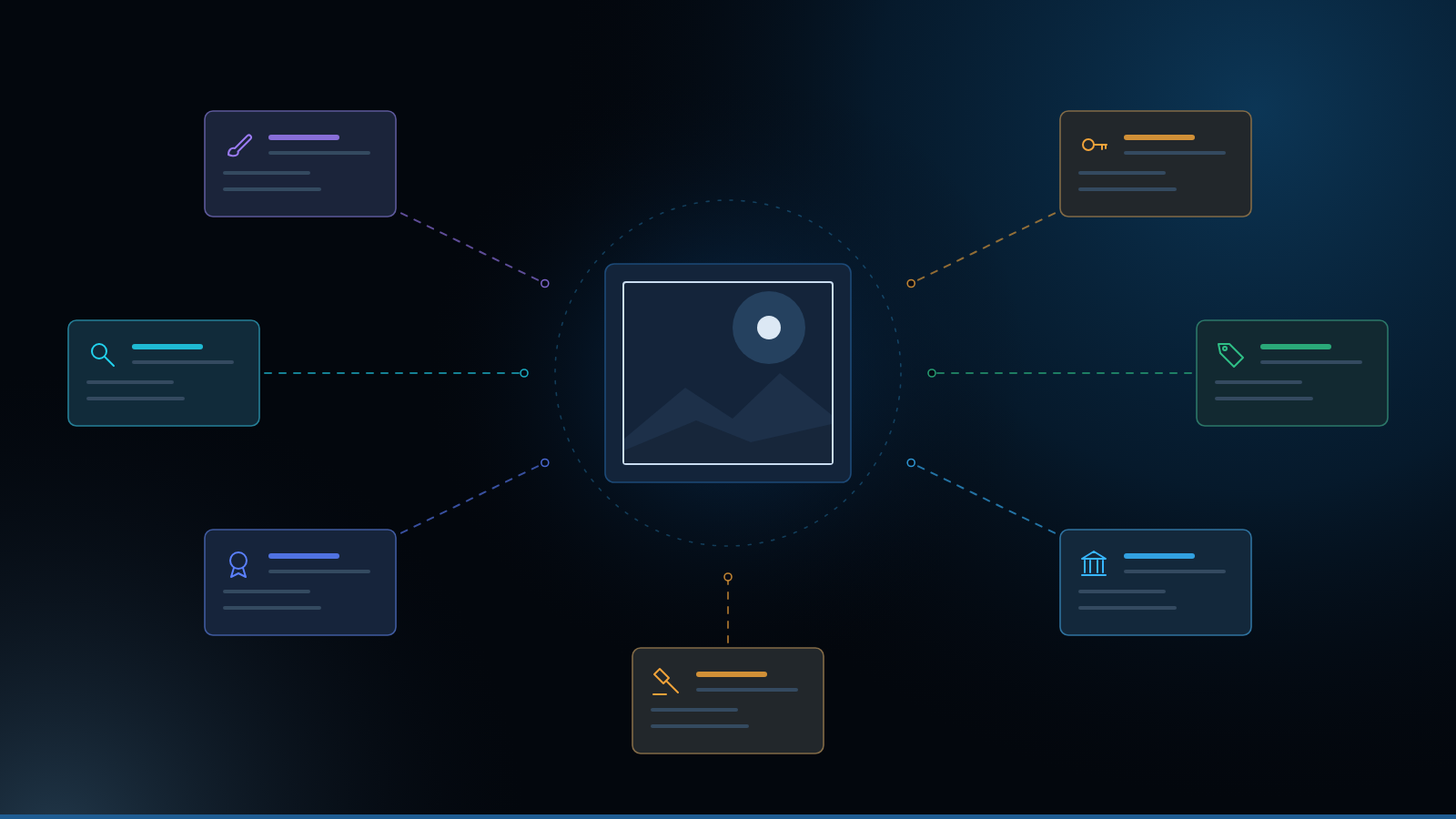
Art has all of the same parts. An artwork’s history sits in many places at once: the artist’s own records are kept by the studio or the estate, the title rests with the current owner, condition reports stay with the conservators who wrote them, appraisals sit with the appraisers who prepared them, rights may be with a gallery, exhibition history is held by the institutions that showed the work, and sale records are kept by whoever sold it.
In other words, every piece of the record exists, but nothing brings the pieces together.
Because of that, when a work changes hands, much of what is known about it has to be checked again, from whatever the previous owner kept, by people who had no part in its earlier history. A dealer gathers what they can find, and a buyer’s advisor checks what they are able to reach. An appraiser researches enough of the provenance to support a value, often more than once over the life of the same piece. A good part of what they learn stays in their own files rather than with the object, so the next person may have to repeat the work. They are piecing together something that was never actually lost, only scattered.
What would that layer have to do?
When people first hear the idea, they tend to picture a single database that everyone uploads their records to. That is not what is needed, and it would not work. Conservators are not going to give their files to a central service run by someone else, nor will collectors share their identities or galleries disclose their sale terms, and they are right to refuse.
So the records stay where they are. The conservator keeps the condition report, and the institution keeps its loan history. What is missing is a shared record that each of those documents can point to, so that when someone asks a question about the object, they get one answer rather than several partial answers held by people who have no way of seeing each other’s records.
For that shared record to be useful, it has to meet three conditions.
The first is that a stranger has to be able to rely on it. A record that only convinces people who already know and trust each other adds very little, because the moment it matters most is when the people involved have never met.
The second is that it has to last longer than whoever happens to be holding it. Over the years, platform after platform has offered to keep this kind of information, and when they closed, the records often went with them. If a record only exists for as long as one company stays in business, the owner of the object is effectively renting it rather than keeping it.
The third is that the record itself has to say what may be shown, and to whom. Details such as a collector’s name, a price, a location, or a restitution claim may need to stay private in one situation and be open in another, and the answer can vary with the object and with who is asking. If those permissions are added as a setting on top of the record instead of being part of it, the system will end up either exposing information it should protect or hiding information others need.
How can a stranger trust a record they did not write?
A stranger can trust a shared record like this if it shows its own history. A record built from other people’s documents is worth something only if someone can check it without having to take anyone’s word for it, including the word of whoever maintains it. That means the record needs to show what was added, who added it, and when, as well as anything that was changed afterward and who made the change. If a record can be edited quietly, it is no more trustworthy than the last person who had access to it, and a buyer looking at the work ten years from now would have no way of knowing who that was.
This is what people mean when they describe a record as tamper-evident. It does not prevent mistakes, and incorrect entries can still be added, but nothing can be altered without the alteration being visible. If a condition report is revised or an attribution is withdrawn, anyone looking at the record can see both the new version and what it replaced.
Where does this already exist?
Other markets already have this kind of connected record, and none of it is new. Property has public registers, title searches, and a chain of ownership that anyone can follow. Aviation has a logbook that begins when an aircraft is built and travels with it through every owner, and without its logbook, an aircraft is worth only a fraction of what it would be with one.
Art has all the parts but has never had them assembled, and it has been that way for so long that rebuilding an object’s history by hand has simply become part of the process.
The real work is in the assembly, and it always has been.